By Jessica Granse
February 02, 2009
"What is it that suddenly forbids her and makes her dumb? Has she been nine years growing and now, when the great world for the first time puts out a hand to her, must she thrust it aside for a bird’s sake?" (528).
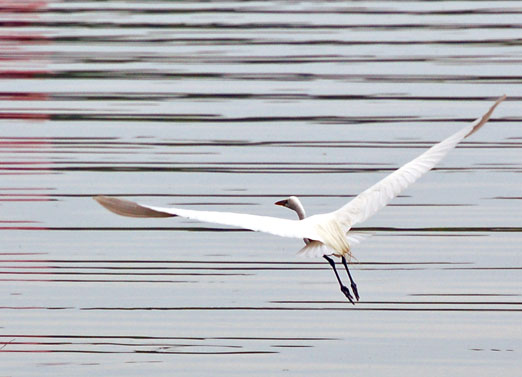
The big "action" for this story would be Sylvia’s big decision at the end of the story of whether to give away the location of the white heron, where surely the boy will shoot it for his collection, or to keep it a secret, and in doing so, save its life. It leaves you to question why she chose the bird’s life over the ten dollars the boy offered and the friendship they could have had. Was it just her innocent conscience, or was it something more?
In the story, Sylvia is described as someone very in tune with nature. She lives with her grandmother and Mistress Moolly, an old cow. At the beginning it mentions that she has no playmates, so she sees the cow’s hiding as a way to play hide-and-seek, and she plays this with joy. When she finally gets a chance to meet another kid, the boy that was hunting, she is very afraid of him, because she is generally afraid of people. This is probably why she is so dedicated to nature. You would think it strange that she chooses to remain loyal to this white heron at the end, rather than to the boy. Many critics have questioned this. I found some light on this subject from an article of criticism on this story by Cynthia Bily on Answers.com,
"Critics have offered many different interpretations about the meaning of this choice. The hunter offers a chance for money, for fulfilled womanhood, for human companionship, for sex. (Although Kelley Griffith, Jr. points out the inherent absurdity in assuming that this temporary partnership between the man and the child could become permanent.) Whatever he represents, it is clear that if Sylvia chooses him she will lose something of herself. She can remain a ‘lonely country child,’ or she can serve, follow, and love him ‘as a dog loves.’"
There is the question of whether the boy implies a continuous friendship, or he wants to pay her the ten dollars, shoot the heron, and leave. Either way, you can see within this paragraph of criticism that she is seen as a representative of nature in some sense, such as she feels she will "lose something of herself" by telling the boy the bird’s location and there is the simile of a dog being related to the possible relationship she could have with the boy. This simile is straight from the story, as you can see by the quotations. One other reason it seems she’s a representation of nature is her name. In this same article of criticism, I found out that her name is from the Latin word for "wood". These are all subtle hints by Sarah Orne Jewett that she represents nature, so by fearing people it’s much like she’s making a statement on how nature fears us. We have chopped down trees that were inhabited by animals and have shot them, so you can see why nature would be afraid of us. When you go up to a squirrel it runs away, much like as the boy came up to her, she hid from him. This story is her stating the fear that nature has for us, because like the boy, we come trampling and shoot at whatever animal we want, simply for our collection, and this is why animals run and hide from us much like Sylvia did from him.

20 points. Yes Sylvan means of the forests/of the woods!
ReplyDelete